
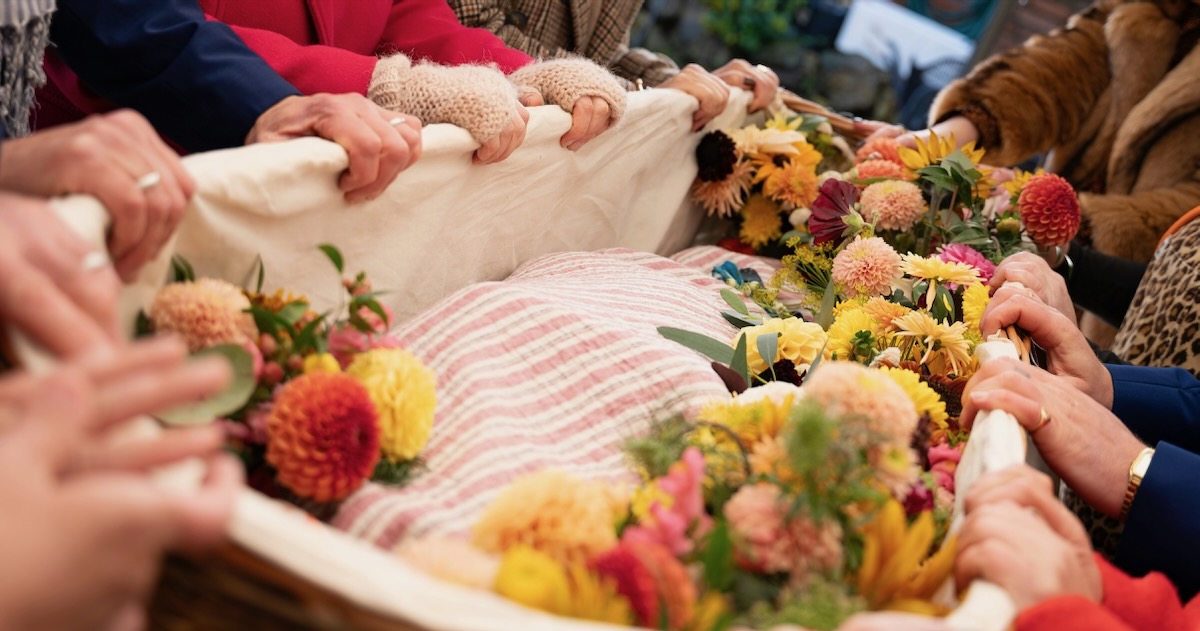
When someone dies at home, you do not have to rush. If the death was expected, there is usually time to sit with the person, say goodbye, and decide what happens next. It is completely normal and it can be a very meaningful process, to look after a person who has died at home; we hope this short guide provides reassurance and some practical guidance and steps.
What does caring for a person who's died at home mean?
Caring for someone after they have died simply means continuing to treat them with the same dignity, respect and love you showed during life.
For many generations, families cared for loved ones at home before funerals became more commercialised. Today, families in the UK still have the right to spend time with the person who has died and, if they wish, take an active role in their care. Funeral directors can support this process rather than immediately taking over.
For some people, this time helps make the reality of the death easier to accept. For others, it provides space for family members to gather, share memories and say goodbye without feeling rushed.
Can you keep someone at home after they have died?
Yes. Many people are surprised to learn that if a person’s death was expected, you can keep the person who has died at home for any period of time before the funeral. Their death will need to be verified and you will need to register their death (see details on our When Someone Dies page), but there is nothing to stop you from keeping a person at home, for a long as you choose, before their funeral.
This allows family and friends to:
- Spend quiet time together
- Invite relatives to visit
- Hold a simple vigil
- Include children if appropriate
- Prepare for the funeral at a gentler pace
At Heart & Soul Funerals, we actively support families who want this experience and we can provide practical guidance throughout.
How do you care for the body at home?
The aim is not to carry out medical procedures. Instead, you are simply providing gentle, respectful care.
- Turn off any heating in the room where the person is, it’s best to keep them as cool as possible
- Place freezer packs wrapped in cloth (e.g. a tea towel or pillowcase) on their stomach area
- Keep curtains closed if this helps to keep direct sunlight out in summer
- Keep the room cool with air-conditioning, if you have this available
- It might sound counter intuitive but it’s best to keep windows closed, to keep nature out of the room. This isn’t only applicable to summer, we’d recommend this all year round. In cooler months, whilst opening the windows can help to cool a room down more quickly if the heating has been on, we advise the closing them before too long.
Beyond these first steps, there is nothing else essential that you need to do.
Comfort, Washing & Dressing
Beyond keeping a person cool, there are many other meaningful ways to take care, which may hold additional personal meaning. Some people choose to:
- Lay their person flat on a bed.
- Support their head with a pillow, if appropriate.
- Fold their hands naturally or place a meaningful object in their hands
- Cover their person with a favourite blanket or sheet.
- Wash their person’s face and hands
- Moisturise dry skin using their own personal creams
- If the person was clean shaven, give them a shave
- Brush or blow-dry their hair
- Dress them in favourite clothes, comfortable pyjamas or wrap them in a natural shroud
- Paint their nails and put their make up on, if this was something they enjoyed having
What happens to a person when they die?
When a person dies, over the course of a few hours their body will gradually cool down to the temperature of the room - they will begin to feel cooler to touch.
People who’ve died often look more pale as their blood is no longer being pumped around their body. Their complexion may also look a little waxy. Gravity plays a part here too, since the heart is no longer pumping blood around a person’s body it’s common for their blood to settle, making their skin look darker towards their back, if they’re lying flat.
Sometimes rigor mortis can occur; this is when a person’s muscles become stiff, then relax again. Not everyone is affected by this and it’s important to know that rigor mortis can come and go. It affects people differently and may not disappear entirely, leaving a person with some remaining stiffness.
It is completely normal to feel concerned about what physical changes may take place after a person dies, but for some, there are very few, if any changes at all. The best thing to do is to keep a person as cool as possible to slow down any changes and to keep their skin dry and cool.
It’s possible to keep a person at home for as long as you would like to, before their funeral. We have supported many families to do this and we are always available to help bring a person into our care, if this feels right at any point.
Why choose to care for someone after they’ve died?
Caring for a person who's died at home is not something many of us expect to do, yet for countless families it becomes one of the most meaningful parts of saying goodbye.
There is no right or wrong approach. Some people feel reassured by immediate professional support, while others find comfort in spending time together before the funeral begins.
Understanding that you have choices can make an overwhelming time feel a little more manageable. Whether you spend an hour, a day or several days with your loved one, those quiet moments often become lasting memories of care, love and respect.
Additional advice and links
Good Funeral Guide: https://goodfuneralguide.co.uk/looking-after-the-body-of-a-person-who-has-died/


